
unnamed

Ending payday pilferage (NJ)

New Jersey strengthens its wage-theft laws

By: Daniel J. Munoz
August 19, 2019 12:01 am

Less than a day after Acting Gov. Sheila Oliver signed a measure ramping up penalties for violations of the state’s wage theft law, state regulators announced they hit an employer with a $20,000 fine for allegedly engaging in that very practice. …

Janice Fine, an associate professor who heads the Center for Innovation in Worker Organization at the Rutgers School of Management and Labor Relations, said that such a quick turnaround will shock employers engaged in the same practices and that they need to start paying workers what they are actually owed.

“If you name and shame it works,” Fine said.

Wage theft happens when an employer does not pay workers what they are owed; it can happen in service industries, blue collar sectors and office environments, Fine said. Theft can take a variety of forms: refusing to pay workers at all or refusing to pay for hours worked; refusing to pay standard hourly or overtime minimum wage rates, or refusing to pay for time out of regular shifts or “off the clock.” Employees might be given checks that bounce, have illegal deductions taken from their paycheck or deductions for meals and other breaks they did not actually receive.

At least $2 billion in stolen wages were recovered nationwide between 2015 and 2016, according to a 2017 study by the Economic Policy Institute.

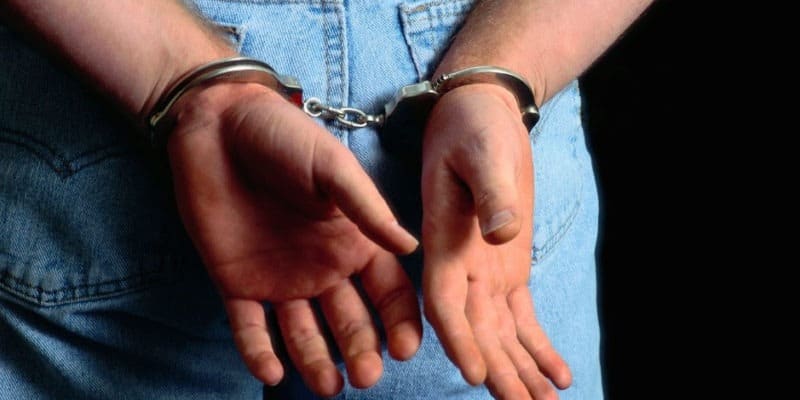
The newly enacted New Jersey measure increases fines for wage theft to between $500 and $1,000 and provides for prison sentences of between 10 and 90 days for a first offense. Fines would climb to between $1,000 and $2,000 for a second offense, and imprisonment for up to 100 days. Habitual offenders could face up to five years in prison and fines of $15,000.

To force the hands of employers found guilty of wage theft, the state labor commissioner can revoke an employer’s license – effectively shutting down the business – until the correct wages are paid.

Employees can seek recovery of up to six years of stolen wages, or up to 200 percent of their stolen wages – capped at $50,000 – if business owners are found to have retaliated against workers for reporting the thefts. Proponents of the anti-retaliatory measures argue they are necessary to prevent employers from forcing workers to keep quiet about wage theft.

“Today we want to send a message to employers, the bad employers, that in New Jersey we are not going to tolerate the exploitation of any worker,” Oliver said at an Aug. 6 bill-signing ceremony in Elizabeth.

(Read More)

unnamed

N.J. contractor gets prison for cheating undocumented workers out of $155K at dorm project in Camden (NJ)

By Joe Brandt
Posted Sep 12, 2019

Past violations should have stopped Albert Chwedczuk from getting any public money – and therefore, from working on a student housing facility for Cooper Medical School.

He was barred from working on public contracts after past violations of the state Prevailing Wage Act with companies Ren Construction and Real Construction. But he created a new company that soon earned a $400,000 subcontract for masonry work at a Cooper dorm on South Broadway in Camden.

During that work, from 2015 to 2016, Chwedczuk did not pay prevailing wage to his employees, many of whom were undocumented immigrants, the state Attorney General’s office and Department of Labor and Workforce Development said in a news statement.

They estimated that he cheated employees out of about $155,166 in wages once obtaining the contract. He paid most employees a fraction of the prevailing wage they were owed, and others were not paid at all. Chwedczuk also sent falsified payrolls to the project’s general contractor each week.

He also told employees to lie to an investigator from the state labor department about the wages they were receiving, the statement says.

“When contractors receive taxpayer dollars for a public project, they promise to pay prevailing wages to employees for all their hard work,” Attorney General Gurbir Grewal said in the statement. “But this employer cheated his workers and hoarded public funds for his own enrichment. This case is a message to all employers that we will not tolerate contractors underpaying their workers and lying about it.”

“Contractors working on public projects in New Jersey must pay their workers every penny they are entitled to under the law,” Labor Commissioner Robert Asaro-Angelo said.

Chwedczuk pleaded guilty on March 27 to a second-degree charge of false contract payment.

On Sept. 6, Camden County Superior Court Judge Mark Chase sentenced Chwedczuk, 45, of Toms River, to three years in state prison.

(See Article)

10 laborers getting $170K in back pay after state finds company short-changed them on construction job (NJ)

By: Kevin Shea, for NJ.com
August 9, 2019

Ten construction workers will split a $170,000 settlement with a company the state says underpaid them while working on a construction job at a Trenton senior living community.

The company, Tri County Real Estate Maintenance Co., of Carneys Point, is also paying $30,000 in administrative fees and penalties, the state Department of Labor and Workforce Development announced Friday.

The project at the Trent Center East and West apartments on Greenwood Avenue in Trenton received tax credit incentive funding, through the State Economic Redevelopment and Growth program, and was subject to New Jersey’s prevailing wage laws.

A state Labor Department investigation, sent to the agency by the U.S. Department of Labor, found Tri County underpaid the laborers.

In this case, laborers stated they were paid between $15 and $30 per hour, but the prevailing wage rate was $55.37 per hour for a laborer, the state said.

The state’s Prevailing Wage Act provides level wages for workers on public works projects – to protect workers and prevent unfair labor competition. The rates vary by county and trade, the state says.

“Public contracting is not a right – it is a privilege,” Labor Commissioner Robert Asaro-Angelo said in a statement. “We want all employers to know that our department takes the state’s prevailing wage laws seriously, and we will continue to investigate these matters to protect our taxpayers’ investments.”

(See Article)

NJ Department of Labor Adopts Regulations on Suspension and Revocation of Employer Licenses (NJ)

National Law Review
Friday, October 18, 2019

Continuing New Jersey’s efforts to eliminate and to hold employers accountable for employee misclassification, the state’s Department of Labor and Workforce Development (NJDOL) recently adopted Regulations implementing a 2010 law (“Law”) that empowers the NJDOL Commissioner (“Commissioner”) under certain circumstances to direct the suspension or revocation of one or more licenses held by an employer who has failed to maintain and report required State wage, benefits and tax records or who has failed to pay wages, benefits, taxes or other contributions required by State law. The Regulations specifically empower the Commissioner to direct the suspension and revocation of State-issued occupational and professional licenses, such as for physicians, dentists and other licensed healthcare professionals, where such individuals have management responsibilities sufficient to be deemed an “employer.” Incorporating the definition of employer contained in Article 1 of New Jersey’s “Wages” law N.J.S.A. 34:11-4.1(a), the Regulation states, “the officers of a corporation and any agents having the management of such corporation shall be deemed to be the employers of the employees of the corporation.”

By way of summary, under the Law, upon the Commissioner’s finding that an employer has failed to maintain and report all required documentation regarding wages, benefits and taxes and has failed to pay the wages, benefits, taxes or other contributions due – for even a single employee – an employer will face a NJDOL audit within 12 months. Such taxes and contributions owed to the State include for example, employment taxes, and unemployment and temporary disability contributions.

If the NJDOL audit reveals further violation, the Commissioner may direct other New Jersey agencies to suspend or revoke State-issued licenses held by the offending employer. In addition, the employer will be subject to another audit within 12 months. If the Commissioner finds, after hearing, that the employer has continued in its failure to comply with the Law, the Commissioner is empowered to direct permanent revocation of the employer’s State-issued licenses.

Since taking office in 2018, New Jersey under Gov. Phil Murphy has taken action targeting employee misclassification, including the establishment of a Task Force on Employee Misclassification (“Task Force”) (see Task Force Act Now Advisory) and a sweeping “Wage Theft” law (see Wage Theft Act Now Advisory), which added substantial penalties for failure to pay wages and benefits to employees, including workers who were incorrectly classified as exempt or independent contractors. The Regulations, further highlight the Murphy Administration’s focus on this issue by adding another potential element of personal liability for such violations for New Jersey’s licensed professionals who are deemed employers.

(See Article)

Ironworkers, Welders Recoup $6M in Wages (NY)

Some 500 ironworkers and welders will receive $6 million in wages and overtime pay improperly withheld by a Queens company. Matthew Chartrand, business manager for Ironworkers Local 361, said the settlement under which AGL Industries has begun paying the workers meant that ‘one of the bad players in the construction field is being brought to justice.’

By: RICHARD KHAVKINE / Aug 19, 2019

A Maspeth, Queens, steel-fabrication company copped to cheating hundreds workers out of overtime pay and wages, and agreed to pay out more than $6 million owed to welders and ironworkers, according to its plea deal with the state Department of Labor following a joint investigation with the Manhattan District Attorney’s office.

AGL Industries pleaded guilty to third-degree grand larceny and began paying 499 workers the money owed them with a $1.5-million allocation Aug. 13, Manhattan DA Cyrus Vance Jr.’s office said.

‘Bad Player’

The balance will be paid over five years in what is the largest single wage recovery in the DOL’s history.

The company also admitted to reporting fraudulent financial information and will settle through a $260,855 payment to the state’s Unemployment Insurance fund, the DA’s office said. A company official, Dominick Lofaso, also pleaded guilty to a class D felony for grand larceny.

Welders and ironworkers had complained to company officials about underpayment but were essentially told “tough,” according to the DA’s office. They then took their grievances to Ironworkers Local 361, in Ozone Park, and the DA’s office in February 2018. A subsequent joint investigation by the DA’s Construction Fraud Task Force and the DOL revealed that the company withheld overtime and other wages from workers during a roughly four-year period starting in November 2013.

Matthew Chartrand, business manager Local 361, hailed the settlement, saying “one of the bad players in the construction field is being brought to justice. Thanks to all-this is a great job for the benefit of workers!”

The DA’s office said the settlement represented a “monumental victory for construction workers,” adding that exploitation of construction workers is widespread despite that trade’s “treacherous” working conditions.

‘Landmark Conviction’

In the statement, DA Vance said the “landmark conviction” would restore “rightful earnings” to the ironworkers and welders. He said the Construction Fraud Task Force has returned about $7.4 million to workers since its creation.

“We are committed to fighting wage theft, which impacts employees across all industries, but is especially common in the construction industry,” he said the statement. He urged workers who believe they have been cheated out of earnings to contact the task force by text message at (646) 712-0298. Messages can be submitted anonymously.

The DOL last year paid about 35,000 workers nearly $35 million it had collected from companies that engaged in wage theft and public-works violations. The department has returned nearly $300 million in stolen wages to 280,000 workers since 2011.

“Wage theft and fraud have no place in New York, and unscrupulous companies who break the law will be held accountable,” Department of Labor Commissioner Roberta Reardon said in the statement from the DA’s office.

(See Article)

unnamed

Area DA’s pledge crackdown on wage theft, public works violations (NY)

October 18, 2019

NEWBURGH – County district attorneys in the Hudson Valley, along with representatives from labor and construction associations, Thursday afternoon, explained the detriments associated with construction and wage fraud that has become a growing concern for public projects, subject to an RFP bidding process for which private contractors are eligible to apply.

In New York, as of 2018, $35.3 million were returned to 35,000 workers directly related to wage and workers compensation fraud.

Orange County District Attorney David Hoovler and Dutchess DA William Grady toured the construction underway at the Newburgh campus of Montefiore St. Luke’s Cornwall Hospital on Thursday.

Hoovler said his office has found a steady increase in the county over the last four years and he outlined a number of ways these different fraudulent practices appear that they have discovered.

“Prevailing Wage Fraud is where you don’t pay the proper wage; or, rather than paying the proper wage, you misclassify someone. Let’s just say a laborer is supposed to make $20 per hour, but a painter has to make $40 per hour. You have people painting; but, you classify them as a laborer. So, you should be paying them $40, but you’re saying you’re only paying them $20. That’s a form,” said Hoovler.

Worker’s Compensation, not having the proper Worker’s Compensation, or Worker’s Compensation at all. “It’s very dangerous if someone gets hurt on the job site. Other liability insurances, that contractors don’t carry, not having them; and then, finally, not paying the proper taxes,” he said.

Hoovler explained that these cases will use prosecution as a last resort. Their first priority is to get these contractors educated and then to get them compliant. A main incentive for these fraudulent behaviors is due to trying to rig the RFP process, where the lowest bidder must be taken. Wage fraud and lack of insurance allows these contractors to submit substantially lower bids.

When it comes to projects that are related to public health and safety, following appropriate practices is of the utmost importance because of the real danger shoddy construction, unqualified workers and lack of insurance could result in.

(Read More)

Construction middlemen put workers in danger by cheating workers comp insurance providers: DA (NY)

By SHAYNA JACOBS
NEW YORK DAILY NEWS
SEP 05, 2019 | 8:21 PM

A labor broker whose company pairs workers with construction gigs put endangered their employees by scamming workers compensation insurance companies in an “extensive fraud scheme,” Manhattan prosecutors said Thursday.

Labor broker Salvador Almonte, 38, and insurance broker Steven Asvazadourian, 40, denied the employees coverage partly by lying about the size of Almonte’s work force, Manhattan DA Cy Vance Jr.’s office said.

That drastically cut Almonte’s workers compensation insurance premiums, saving him millions of dollars.

But it also put the workers at risk of not being covered for on-the-job accidents or fatalities. More than a dozen of Almonte’s workers were injured and one died while he was playing games with their worker’s comp, Vance’s office said.

New York law requires nearly all employers to carry worker compensation insurance.

But not only did Almonte fail to buy the proper coverage – he declined to cooperate with the state board that decides workers’ claims, prosecutors say.

Almonte allegedly claimed to state officials his annual payroll for two carpenters and two cleaners was $70,000 per year. But in reality, he had dozens of employees, and his payroll for a typical two-week period was $110,000.

Almonte and Asvazadourian pleaded not guilty Thursday to charges including insurance fraud and scheme to defraud in Manhattan Supreme Court. They were released without bail.

Almonte is also under investigation by the IRS for failure to pay taxes.

(Read More)

Thoughts on labor, unions and prevailing wages (OR)

I’ve come to my support of labor, unions and prevailing wages in several ways.

Theresa Kohlhoff
Thursday, August 29, 2019

Labor Day signals the end of summer, kids going back to school, my birthday, late season harvests and barbecues. This Labor Day, given the PERS vote in the legislature and the LO council goal to advocate against our state prevailing wage law, as the sole dissenter on the council to this “goal,” I wanted to also make some observations about the significance of the holiday itself.

Oregon’s prevailing wage law, “Little” Davis-Bacon Act, is modeled after the federal law. The statutory purposes are progressive: “To ensure that contractors compete on the ability to perform work competently and efficiently while maintaining community-established compensation standards; to recognize that local participation in publicly financed construction and family wage income and benefits are essential to the protection of community standards; to encourage training and education of workers to industry skills standards and to encourage employers to use funds allocated for employee fringe benefits for the actual purchase of those benefits.”

If a public works project – e.g. schools, roads, pipelines and other public facilities – is going to cost over $50,000, LO must pay prevailing wages. These wages are generally, but not precisely, the rate that union workers get paid in a particular geographical area and are set by the Bureau of Labor and Industries. So for example, the prevailing rates for a public contract in the Portland metropolitan area will generally be higher than, say, in Eastern Oregon.

On the other far end, non-union, non-prevailing wage construction workers may be paid at a cheaper rate, and with or without benefits. Touted as choice and freedom for the worker, it is touted as fiscal responsibility: Paying the differential between the two rates – prevailing and non-prevailing – is denounced as a waste of tax payer money.

I disagree.

If one only focuses on the cost of prevailing wage labor in public contracting versus cheaper non-prevailing wage labor, the economic analysis completely overlooks equal or greater cost savings and the major benefits derived from prevailing wage – to the public entity, to the worker and to the community. Note: I am not advocating for public projects that are beyond our means, or for disregarding prudent budgeting. Raw cost to taxpayers obviously matters. It’s just that true costs have to include far more economic and community factors than just the one criteria: cheapest contract bid. One only has to look at the dismal prospects of our youth as the dark cloud of income inequality and the gig economy reveals who is benefitted by the squeeze and who is gasping from being squeezed.

I’ve come to my support of labor, unions and prevailing wages in several ways. For one, I’ve had practical experience as a lawyer representing a private contractor doing major projects in five states.

He preferred to use union labor and continues to support a strong union.

He got better ratings and therefore cheaper insurance. He was rewarded with an enhanced reputation, even in a fast moving environment, for getting jobs done well and on time. Nothing in this world is perfect but to this business owner the extra labor cost was really minimal when the issue was considered as a whole.

Research confirms and expands these observations. For example, see www.smartcitiesprevail.org/benefits-prevailing-wage/. A union construction worker earns as much as 17% more, lowering the poverty rate by 30%; worksite injuries and fatalities are reduced by as much as 18%; apprenticeships for veterans and POC are expanded by 40%; unfair competition from employers cutting corners on safety/quality is reduced; job productivity is improved by as much as 20%; up to $367 million is saved on food stamps and tax credits. Every $1 of prevailing wage produces $1.50 for the economy! Is this not the way to opportunity? Is this not the way to have confidence and NOT scare ourselves into recessions? The way to build/rebuild a vibrant, resilient, capable middle class that benefits and supports the entire community? I certainly think so.

(Read More)

unnamed

George Wade Bridge: painting contractor sentenced to 46 months’ imprisonment (PA)

by: Kara Urland
Posted:
Aug 16, 2019 / 11:24 AM EDT

HARRISBURG, Pa. (WHTM) – The U.S. Attorney’s Office announced that the painting contractor for the George Wade Bridge Project, Andrew Manganas, age 61, of Canonsburg, Pa., and Panthera Painting, Inc. was sentenced to 46 months’ imprisonment followed by five years’ on supervised release.

Manganas is charged for theft from union plans, wire fraud, and discharge of pollutants into the Susquehanna River. Judge Sylvia H. Rambo also fined Manganas $20,000 and Panthera Painting, Inc. $200,000.

In September 2009, PennDOT awarded a contract for rehabilitation work on the George Wade Bridge to J.D. Eckman as the prime contractor. In October 2009, Panthera Painting was awarded a subcontract by Eckman that covered the blasting, resurfacing, and painting of the structural steel on the George Wade Bridge.

The federal oversight and funding of the contract required each contractor and subcontractor to submit Certified Payroll Reports for every worker and every pay period to certify that the appropriate wage was being paid to each worker.

Manganas and Panthera Painting, Inc. pleaded guilty in January 2018, to submitting false payroll reports that did not accurately reflect the amount workers were being paid.

By under-reporting wages paid, Manganas defrauded the federal agencies paying for the bridgework. By failing to properly remit wages to the unions, Manganas effectively stole money from the workers and the union.

“Andrew Manganas enriched himself by cheating his workers and their unions, and defrauding the U.S. government,” said Michael T. Harpster, Special Agent. “The FBI and our partners will continue to investigate and bring to justice those playing fast and loose with federal funds.”

(Read More)

District Attorney Krasner Announces New Labor Liaison to Bolster Protections for Workers (PA)

by Construction Citizen | October 11, 2019

Philadelphia District Attorney Larry Krasner announced the creation of a new Labor Liaison position in the Philadelphia District Attorney’s Office (DAO) to support the Economic Crimes Unit in investigating and prosecuting crimes against workers. Assistant District Attorney (ADA) Danielle Newsome has been appointed to the position, which is the first of its kind in the City of Philadelphia.

An experienced labor attorney, ADA Newsome will focus on crimes including wage theft, purposeful misclassification to avoid payment of benefits and wages, labor trafficking, worker’s compensation fraud, and unemployment compensation fraud.

“I am proud to appoint ADA Danielle Newsome our first ever labor liaison in the Economic Crimes Unit. Her experience and knowledge about workers’ rights and vulnerabilities to exploitation will increase our ability to prosecute crimes committed against people who historically had few avenues to seek justice,” District Attorney Krasner said. “Employers have enormous power over people, particularly low-wage and undocumented workers, and must be held accountable when they abuse that power, break the law, and take advantage of the vulnerable. The addition of labor liaison ADA Newsome to the District Attorney’s Office will help us make sure workers know their rights and that employers know their responsibilities under the law.”

Prior to joining the DAO in September 2019, Newsome was staff attorney for the Health Professionals and Allied Employees Union, American Federation of Teachers (AFT), which is New Jersey’s largest healthcare union. Newsome began her legal career as an associate at the Philadelphia labor and employment law firm of Willig, Williams & Davidson where she represented a variety of public and private sector unions and individual workers. She has also worked as an organizer with unions including the United Food and Commercial Workers (UFCW) and the AFT.

“I’m excited to be in this new position and to have the opportunity to protect some of the most vulnerable workers in our city, while we send the message to unscrupulous employers that their conduct will not be tolerated,” ADA Newsome said. “Through my experience as a labor attorney and my conversations with labor leaders across the region, the need for a labor liaison in the DAO is clear. I look forward to helping more vulnerable Philadelphians secure justice with the overall goal of improving labor conditions across the city, because this kind of work benefits all workers, regardless of their industry.”

(Read More)