
Illinois lawmakers consider bill to make general contractors responsible for other’s unpaid wages (IL)

By Cole Lauterbach
The Center Square | Jul 19, 2019

Illinois lawmakers are considering sending Gov. J.B. Pritzker legislation that would put general contractors on the hook for any wages a subcontractor failed to pay workers.

The House passed the legislation this spring. Should Pritzker sign the bill into law, any general contractor who hires a subcontractor that doesn’t properly pay employees could be sued for those wages.

Sponsoring Senator Laura Fine, D-Glenview, said wage theft has become common

“Wage theft could range anything to not paying workers for hours they work to not paying the legal minimum wage,” she said.

Fine said she wanted to get as much feedback from opponents as possible, signaling that she may amend the bill.

Bill Ward of the Homebuilders Association of Illinois said no one supports wage theft, but the bill, as it’s written, would increase costs for companies due to the increased risk of getting sued.

“This bill says an innocent person who has paid the subcontractor in whole, the general contractor, can be gone after,” he said.

Fine said the bill would allow general contractors to be exempt from the law if they get verification from the subcontractor that they’ve paid all of their people, but Republicans in the House said that would be a significant burden for a general contractor to undertake.

(Read More)

Mendoza signs prevailing wage executive order (IL)

By Jerry Nowicki
Aug. 14, 2019

SPRINGFIELD – With a $45 billion, six-year capital infrastructure plan becoming law earlier this year, Illinois Comptroller Susana Mendoza signed an executive order Tuesday aimed at refocusing enforcement of state prevailing wage laws for construction projects receiving state money.

“When I took office in 2016, we made sure to let folks know that … our goal is to continue to enforce this executive act. What we’re doing now is just reaffirming it and updating it and getting the word out as we embark on a $45 billion capital plan that this is state law, people need to be aware of it, they need to abide by it.”

Prevailing wage is the rate of compensation determined by the government that must be paid to workers for projects involving state government funding.

At a news conference in her office Tuesday, Mendoza warned of halted checks for any contractor if it comes to her attention workers are not receiving the prevailing wage.

Mendoza said anyone believing a company is in violation of the act could notify her office.

“They would notify us, we would look into that alongside the Department of Labor, and we have the potential to stop payments, further vouchers going out, further warrants, essentially, being sent out until that corrective action is taken,” she said.

Mendoza’s executive order outlines other steps her office will take to ensure contractors pay their employees the prevailing wage as well. The executive order says her office will not accept any grant or contract submissions without proof that the contractor is in compliance with the prevailing wage act, and would have the authority to “pre-audit” any state-funded contracts as well.

(Read More)

Mendoza says she’ll withhold pay from capital plan contractors who don’t pay prevailing wage (IL)

By Doug Finke
Posted Aug 13, 2019 @ 5:21 pm

Comptroller Susana Mendoza said Tuesday her office will monitor contracts awarded under the state’s new $45 billion capital program to ensure contractors are adhering to prevailing wage laws.

If someone doesn’t, Mendoza said, her office will take steps to halt any payments until the contractor comes into compliance.

“We know (prevailing wage) is the law, but not everybody follows it,” Mendoza said. “What we have is a $45 billion capital plan that we are about to embark on. Anything we can do to make sure that state taxpayer dollars are being utilized (in a way that) that state law says that they must is important to get the word out and educate the public.”

Mendoza said her office will monitor and conduct preaudits of contracts and grants awarded under the Rebuild Illinois capital plan. She said her office is prepared to receive complaints from people who are aware of prevailing wage violations and will also work with the Department of Labor on complaints it receives. Attempts will be made to bring a contractor into compliance, but if all else fails, the office has a nuclear option.

“What we have the ability to do that no other state agency or no other constitutional officer has the ability to do is withhold payment,” Mendoza said.

Mendoza acknowledged the problem of prevailing wage violations is not widespread.

“Every now and then we get complaints of folks who are in violation,” she said.

Mendoza said contractors with the state have to check a box on forms pledging to adhere to the prevailing wage, so the existence of the law should come as no surprise.

Some Republicans, notably former Gov. Bruce Rauner, believed the prevailing wage law forced up the cost of public works projects.

“I disagree with this being framed as bloated and higher costs,” said Illinois AFL-CIO President Michael Carrigan. “Prevailing wage is a product of collective bargaining. Unions and employers sit down and have hard negotiations across the table. Those are a product of negotiation.”

Former Comptroller Dan Hynes, who is now a deputy governor in Gov. J.B. Pritzker’s administration, signed a similar executive order in 2002. However, enforcement of the order has fallen off in recent years.

(See Article)

Gov. Whitmer Signs Executive Directive to Put Michigan Jobs First (MI)

Posted: 9:39 PM, Jul 29, 2019
By: FOX 47 News

LANSING, Mich. – Today Governor Gretchen Whitmer signed the Michigan Jobs First executive directive at Lecom Utility Contractors in Roseville to revamp the State’s purchasing policies to ensure that the State awards contracts to companies that create good-paying jobs in Michigan and are good stewards of the state. Currently, only 70 percent of state contracts are awarded to in-state businesses.

“Michigan is home to the hardest working people and best businesses in the world, and our state should work to ensure that more of our Michigan tax dollars support Michigan workers and businesses at every opportunity,” Whitmer said. “We want Michigan to be a home for opportunity for everyone, which begins with supporting businesses that provide fair wages and good benefits. This executive directive will strengthen our commitment to these priorities and bring the greatest possible benefit to Michigan’s businesses, workers, and families.”

Executive Directive 2019-15 expands the list of factors used to determine whether a bid from a potential supplier would provide the best value to the state. Under this new directive, the state must also take into account the overall economic impact of the potential supplier’s bid on Michigan businesses and workers, the wages and benefits offered by the supplier to its workers, the supplier’s track record of labor and environmental compliance, and the supplier’s commitment to economically-disadvantaged zones.

In addition to expanding best value factors, the executive directive also ensures that Michigan businesses receive the full preference to which they are entitled under law when the State makes its purchasing decisions.

“Across Macomb County and the great state of Michigan, there are thousands of incredible businesses with innovative products and outstanding services,” said Macomb County Executive Mark A. Hackel. “It makes sense for the state to prioritize our homegrown job creators and I applaud this effort. Our business development team will engage Macomb County companies and take advantage of the Michigan Jobs First executive directive.”

(Read More)

Sen. Gary Peters wants to hear from workers victimized by wage theft (MI)

By Anne Runkle
August 5, 2019

U.S. Sen. Gary Peters (D-Michigan) wants to hear from workers who have been victims of wage theft.

Peters is conducting an investigation into wage theft practices, which could include:

  • Failure to pay the applicable minimum wage
  • Failure to compensate employees for overtime
  • Misclassifying employees as independent contractors to avoid paying certain benefits or taxes.

Peters, ranking member of the Senate Homeland Security and Governmental Affairs Committee, has directed the committee’s minority staff to conduct an investigation focused on these and other actions that prevent employees from receiving all of their pay.

If you have information to share regarding your personal experiences with wage theft, visit https://www.hsgac.senate.gov/contact/investigations.

“If you put in a hard day’s work, you deserve to get paid for it. Yet every day, workers in Michigan and across the country are denied wages or benefits they have earned on the job,” said Peters. “This investigation will help expose wage theft and develop ways to hold employers who break the rules accountable for actions that hurt hard-working families.”

Wage theft has serious financial consequences for workers and businesses, according to a release from Peters. The Economic Policy Institute estimates that American workers are shorted as much as $15 billion each year due to minimum wage law violations.

Michigan has the fifth highest total of unpaid earnings in the country due to minimum wage violations.

According to EPI, from 2013 to 2015, roughly $430 million in wages were improperly withheld from Michigan workers.

Misclassifying workers as “independent contractors” also negatively impacts taxpayers. According to the U.S. Department of the Treasury, millions of employers nationwide have failed to pay more than $45 billion in employment taxes.

These practices deprive the federal government of billions of dollars in unpaid employment taxes that are used to fund Social Security, Medicare and other benefits, according to the release.

In Michigan alone, a study released in 2008 found that Michigan loses tens of millions of dollars annually from improper classification practices – depriving the state of dollars for projects like highway and infrastructure upgrades, educational programs or public hospitals.

(Read More)

unnamed

Minnesota Building Trades Announce Plans to Fight Wage Theft, Exploitation, Labor Trafficking (MN)

By Filiberto Nolasco Gomez
Workday Minnesota
July 26, 2019

BRAINERD
Leaders of 14 unions that represent Minnesota’s unionized construction workforce Thursday announced the launch of a new initiative to combat wage theft, exploitation, and labor trafficking, which they say pose a growing threat to the welfare of immigrant workers and the health of the state’s construction industry.

The Not On My Watch campaign will enlist union staff and rank-and-file members in efforts to identify cases of abuse, and to assist exploited construction workers. Union construction workers will be asked to wear hard-hat stickers that read “Not On My Watch” or “Ya No Mas” and participate in job-site actions to show solidarity with immigrant construction workers who may be vulnerable to exploitation by unscrupulous contractors.

“This initiative is about ensuring that no construction workers in our state are exploited and that all contractors are held accountable to the law,” said Jessica Looman, Executive Director of the Minnesota State Building and Construction Trades Council, “In Minnesota, workers stand-up for workers.”

Union members and nonunion workers joined forces last month at a rally to protest allegations of wage theft by immigrant concrete workers building the Digi-Key Expansion Project in Thief River Falls, Minnesota that was widely covered on TV and in print. A second major rally is planned for downtown Minneapolis on Monday, July 29, immediately before a Minneapolis City Council hearing on a proposed wage theft ordinance.

Minnesota Building Trades leaders were joined at the unveiling of their wage theft initiative by Attorney General Keith Ellison welcomed the announcement.

“Wage theft is theft, pure and simple. Not only does it rob workers of their ability to afford their lives, it robs them of their dignity,” Attorney General Ellison said. “It’s also often the canary in the coal mine for other serious abuses, like denial of healthcare and human trafficking, which we’ve seen right here in Minnesota. I’m proud that our new law against wage theft is the strongest in the country, but we in government can’t fight it alone. That’s why I’m grateful for the ‘Not On My Watch’ and ‘Ya No Más’ campaigns. It’s powerful that workers themselves will be on the front lines in helping us fight wage theft and helping all workers afford their lives and live with dignity and respect.”

Nancy Leppink, Commissioner of the Minnesota Department of Labor and Industry also welcomed the announcement. “The State of Minnesota is committed to combating wage theft, but we can’t do it alone,” said Commissioner Leppink. “We will need the help of labor, community leaders, responsible employers, and of course workers themselves, to make sure workers know their rights and can bring abuses to light.”

(Read More)

unnamed

ROCHESTER WAGE THEFT CASE IS THE FIRST INVESTIGATION UNDER A NEW LAW (MN)

According to The North Central States Regional Council of Carpenters, worker exploitation is a common practice in the Med City.

Posted: Jul 9, 2019 7:22 PM
Posted By: Annalise Johnson

ROCHESTER, Minn. – A group of Rochester area workers are pursuing a wage theft claim against Ed Lunn Construction. Workers allege Ed Lunn Construction duped them out of thousands of dollars in wages after working the majority of 2018 on a $40 million, city-funded affordable housing project that’s now filling with residents.

Lunn denies legal responsibility and says a subcontractor employed the workers who are accusing him of wage theft.

A new bipartisan law went into effect July 1st aimed at cracking down on wage theft. It doubles the amount of state investigators working on wage theft cases. Violaters can face 5 years prison and a $10,000 fine. The law will be enforceable beginning August 1st.

KIMT spoke to Mike Wille, business agent for North Central States Regional Council of Carpenters. The union advocates for workers rights. He tells KIMT that a labor broker business model exploits workers. He says employees often work long hours without overtime pay and don’t receive workers compensation of unemployment insurance. “They don’t get paid for the work that they performed, or they’ll perform work and they’ll withhold the money and then they’ll pay them for the past work as they do work in the future, so it’s like they’re dangling a carrot in front of this person and the carrot is the money they’re owed,” he explains.

According to Wille, roughly 70% of apartments and hotels built in Rochester in the last five years are built under this business model. “Shirking their responsibilities back onto the employees helps them keep their costs down and enables them to basically cheat and win jobs from contractors that play by the rules,” he says.

Minnesota’s new wage theft prevention law is one of the strongest in the country. “I hope it sets a precedent and a standard across the country for all states and cities and counties to abide by because there is no place for this kind of practice anywhere in the United States,” says Wille. “We’re better than that and our workers deserve better than to be cheated out of their wages.”


(See Article)

unnamed

Minnesota to open wage theft investigations unit (MN)

Written By: Tess Williams
Jul 16th 2019 – 12pm

Gov. Tim Walz signed a new law that invested $3.1 million to the Department of Labor and Industry to enforce wage and hour laws. The new law is designed to protect workers from exploitative employers who do not pay them for their work. The legislation adds criminal penalties for employers.

In turn, the attorney general formed a Wage Theft Unit to enforce the new law and litigate the cases. A press release from Attorney General Keith Ellison said wage theft includes “having hours shaved off your paycheck; being forced to work off the clock; not getting paid for overtime; being paid at a lower rate than promised, sometimes even below minimum wage; being paid in cash or other forms like gift cards, with no Social Security, unemployment or worker’s comp withheld; being misclassified as an independent contractor and more.”

Assistant Attorney General Jonathan Moler and investigator Ana Vergara will staff the unit. Any Minnesotan who has experienced wage theft can contact the attorney general’s office at 651-296-3353 or attorney.general@ag.state.mn.us.

(See Article)

Evers announces members of worker misclassification task force (MN)

By: Nate Beck
Jul 26, 2019

Gov. Tony Evers on Friday announced appointments to a task force that will examine worker misclassification and payroll fraud in Wisconsin.

The appointments come after Evers in April signed an executive order forming the group to re-examine how the state enforces misclassification – a practice believed to be rampant in the construction industry. The task force is charged with developing recommendations on the topic and reporting its activities and findings to the governor on or before March of each year.

“Individual agencies do a great job at combating this serious issue that adversely affects some of our most vulnerable workers, but through this task force, agency efforts will be better coordinated,” Evers said in a statement. “By evaluating each agency’s approach and investigation methods and sharing best practices, our efforts to support Wisconsin workers who are left without important safeguards like unemployment insurance and labor protections will be more strategic and coordinated.”

The task force will be staffed by the Department of Workforce Development and DWD Secretary-designee Caleb Frostman will serve as chair.

DWD’s Unemployment Insurance Division enforces worker misclassification and in 2018 conducted 2,459 audits of companies, identifying 8,877 misclassified workers. The agency last year collected more than $1.5 million in unemployment insurance taxes, interest and penalties.

“I am excited to chair this important task force and proud of the work that investigators have done and will continue to do to help eradicate worker misclassification,” said DWD Secretary-designee Frostman. “The goal of the task force is to give our front-line staff even more tools and strategies that they can employ as they continue their work to support the Wisconsin worker.”

(See Article)

Fair Contracting Foundation of Minnesota and ILEPI Address Minnesota’s AG (MN)

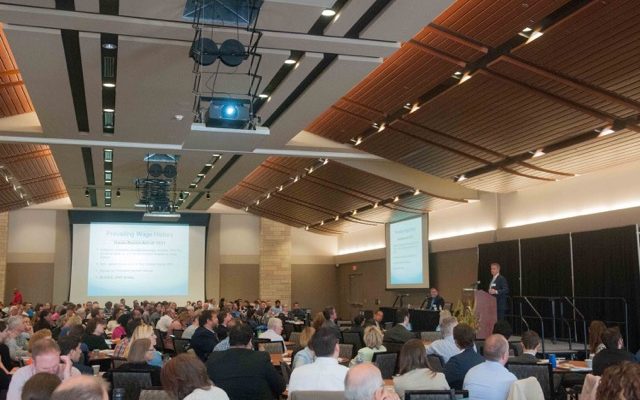
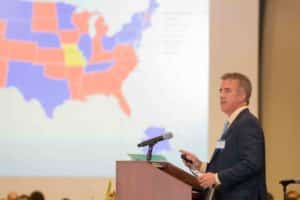
Minnesota’s Attorney General Keith Ellison invited Fair Contracting Foundation’s Mike Wilde and ILEPI’s Frank Manzo to present on the value of prevailing wages to nearly 400 public attorneys and regulators. The history and policy purpose behind prevailing wage laws was covered by FCF. The Illinois Economic Policy Institute’s Manzo gave the audience the findings of a recent study that examined 640 school bid packages. The academic study gave further empirical evidence to the audience of compliance professionals that the projects that required prevailing wages were no more costly than those projects that did not. Attorney General Ellison has already proven to be a champion of Minnesota’s workforce and FCF is encouraged by his commitment to prevailing wage laws.