unnamed

IUPAT DC 35’s Longtime Member Kathleen Santora Gets Appointed to City of Lynn’s Wage Theft Advisory Commission (MA)

by Journal Staff * March 15, 2019

Longtime IUPAT District Council 35-member Kathleen Santora, a leading advocate of women’s recruitment into the building trades, joins city’s advisory board to fight wage theft and worker’s rights violations in City of Lynn

Painters Union District Council 35 is proud to announce that member Kathleen Santora, an advocate of workers’ rights in the building trades and a Lynn resident, has accepted a position on the City of Lynn’s newly created Wage Theft Advisory Committee.

The Wage Theft Advisory Committee, created as part of a city ordinance, will begin meeting bi-monthly to ensure that known violators of Massachusetts wage laws do not receive contracts with the City.

“Now that the committee has been appointed, I am eager to get to work. Wage theft violations occur all over the country, and I’d like Lynn to set an example that this will not be tolerated in this city,” said Ms. Santora.

Ms. Santora was nominated to the position by North Shore Labor Council President Jeff Crosby in part for her tireless efforts on behalf of workers’ rights, particularly those of women.

Through IUPAT DC 35, Ms. Santora has been a leading advocate of women in the workforce. In addition to her participation in DC 35’s Women in Action program which seeks to reach out to all women in the trades, Ms. Santora participates in leading unions in the Tradeswomen Tuesday initiative and Girls in Trades events.

(Read More)

unnamed

Workers demand state protection from wage theft (NV)

By Jeniffer Solis
March 14, 2019

The Arriba Las Vegas Worker Center got its start a little more than a year ago by surveying 300 day laborers. One-third had been a victim of wage theft in the two months prior to the survey.

“It’s almost a ubiquitous phenomenon for low-wage workers, particularly in industries like construction, landscaping, and homecare professionals, daycare, and eldercare,” said Bliss Requa-Trautz, director of the Arriba Las Vegas Worker Center.

While wage theft exists throughout the workforce, it is widespread among the most vulnerable Nevada workers, said Requa-Trautz.

On Tuesday, working Nevadans met with state Labor Commissioner Shannon Chambers at Arriba Las Vegas Worker Center. Victims detailed wage theft experiences in an effort to push for more responsive solutions from the office of the Labor Commissioner.

One man spoke of his experience working for an employer who gradually stopped paying him before threatening to report him to the U.S Immigration and Customs Enforcement.

“I want you to help me get the pay I deserve for the work I did,” said the man in his native Spanish.

Yesenia Mejia, another victim of wage theft, told the commissioner about a case she filed in 2018 for a construction company she said refused to pay for the work of several employees. The Labor Commission refused to take texts, photos, and voicemails as evidence of the theft, said Mejia, and instead told workers to take their complaint to small claims court which would cost money they did not have. In the end the construction company was never penalized despite the various complaints, said Mejia.

“Please help us enforce penalties and get justice. Let them get what they deserve. If they don’t pay us, give them penalties or take their license,” Mejia pleaded.

(Read More)

unnamed

Bill package aims to curb wage theft (PA)

BY MELINA DRUGA | APRIL 4, 2019

Sen. Vincent Hughes (D-Philadelphia/Montgomery) recently proposed two bills aimed at protecting workers from wage theft.

Wage theft is when employers misclassify employees. Misclassification can cause any of the following scenarios: employees are not paid for all hours worked, employees are paid below the minimum or promised wage, employees are denied pay and access to benefits, employees are not paid at all, or employers make illegal deductions or steal tips from tipped employees.

The first bill would require employers to post information about the state’s Wage Payment and Collection Law. This information would include the definition of wage theft and worker remedies for violations. Failure to do so would result in a fine of up to $500.

The second bill would suspend or disbar violators of the law from participating in commonwealth procurement contracts.

“We have to strengthen our laws to protect working people and their right to get paid for the work they do,” Hughes said. “Employees need to know the law ensures they are paid for all hours worked, including overtime. Beyond that, we have to send a clear message to unscrupulous businesses that we will not tolerate wage theft.”

In 2013, wage theft cost Pennsylvania workers $258 million, according to Community Legal Services Philadelphia.

(Read More)

United States: Minnesota Legislative Update: Bills To Watch (MN)

Last Updated: March 14 2019
Article by Bruce J. Douglas, Kathleen Hoffmann and Brian A. Moen

The Minnesota Legislature is in session through May 20, 2019. This session promises to be very active with numerous bills affecting employers and the workplace. Major bills include paid leaves of absence (including family and sick leave), restrictions on an employer’s ability to access social media accounts, right-to-work legislation, vaccination exemptions, wage theft, and the legal standard for sexual harassment, and making available to a complaining party more information regarding the employer’s investigation and corrective action.

Wage Theft: H.F. No. 6 and S.F. No. 1933

A Minnesota bill, H.F. No. 6, seeks to provide that “[n]o employer shall commit wage theft.” Generally, “wage theft” refers to instances where an employer intentionally does not pay an employee all wages to which he or she is entitled. Common examples of wage theft include denying meal or rest breaks, paying a wage below the minimum wage, withholding tips, and not paying overtime. Minnesota state law currently addresses many of these specific scenarios (see Minn. Stat. § 181.03), but the proposed bill seeks to broadly define “wage theft” to include all situations where “an employer has failed to pay an employee all wages to which that employee is entitled.”

The bill also seeks to introduce stricter recordkeeping requirements for employers, increase the Minnesota Department of Labor and Industry’s enforcement tools (e.g., granting it the ability to issue subpoenas), and impose stricter penalties on employers for certain violations. Specifically, the bill proposes increasing monetary penalties for certain recordkeeping violations from $1,000 to $10,000, and imposing harsher criminal penalties upon employers for violations. For example, under the bill, an employer would be guilty of a gross misdemeanor if it engaged in wage theft and the total of unpaid wages to all affected employees was $10,000 or more.

H.F. No. 6, as written, has 33 Democrat and 2 Republican sponsors, but it is opposed by the Minnesota Chamber of Commerce. Proponents argue the bill is necessary to protect not only Minnesota employees, but also businesses and the community, which are harmed by those engaging in wage theft. For example, supporters argue that businesses engaging in wage theft cause the state to lose revenue from unpaid taxes on employee income. Conversely, critics argue that the bill’s definition of “wage theft” would presumably include situations where an underpayment was unintentional, which would therefore criminalize honest mistakes (for example, an employer could be found guilty for an inadvertent payroll error that caused a shortage in an employee’s paycheck). The bill was referred to the House’s Judiciary Finance and Civil Law Division on February 14, 2019.

(Read More)

Maryland just became the sixth state to raise the minimum wage to $15 an hour (MD)

Democrats in Maryland just overrode the governor’s veto of the $15 minimum wage bill.

By Alexia Fernández Campbell
Mar 28, 2019, 2:20pm EDT

Maryland just became the sixth state to raise the minimum wage to $15 an hour.

On Thursday, lawmakers managed to override Republican Gov. Larry Hogan’s veto of a minimum wage bill. Maryland’s current minimum wage is $10.10, and the new policy willgradually raise the wage floor to $15 by 2025.

Hogan had blocked the bill earlier this week, claiming that such a change would “devastate” the economy. But it was clear early on that he would be unable to stop the national momentum building around a $15 minimum wage.

Democrats control both chambers in Maryland’s General Assembly, and passed the wage hike bill with a veto-proof majority. On Thursday, they overwhelming voted to override Hogan’s veto by 96-43 in the House and 35-12 in the Senate.

Maryland is now the third state to phase in a $15 minimum wage so far this year, and the sixth overall. In February, New Jersey and Illinois did so, too.

While Hogan’s veto was not surprising (he has always opposed a $15 minimum), it’s a striking position in a state where the $15 minimum wage is so popular with voters in Maryland and across the country.

The law will benefit about 573,000 workers in Maryland who currently earn less than $15 -about 22 percent of the state’s workforce, according to the National Employment Law Project.

(Read More)

NH Voices: Jeff Sullivan — Prevailing wage: Working families prevail (NH)

By JEFF SULLIVAN
Apr 7, 2019

MR. REAP’S RECENT commentary on SB 271 (An Act to Require Prevailing Wages on State-Funded Public Works Projects) misses the mark and distorts the reality. Trying to turn the debate to a union issue is an effort to contort the facts, and the benefits, of the proposed legislation.

Despite wide-spread public misconception, a misconception also apparently shared by the CEO of the Associated Builders of New Hampshire (he should know better), prevailing wage is not “union” wage. Prevailing wage, both federally and in the states with similar laws, is based upon extensive surveys conducted in which contractors disclose wages and benefits paid to its workforce. There is no distinction between union and non-union workers. These surveys will then set direction for wage rates to be paid to construction workers on government-funded projects.

The “facts” tossed around by Mr. Reap have no support when put to the test. Simply put, a prevailing wage law will require contractors to compete for public projects in New Hampshire based on a set of criteria that ensures its workforce is the best-trained, best-equipped and best managed. Projects will be awarded to high-performing contractors; not to those that can assemble the cheapest, least-trained workforce. It is no coincidence that jurisdictions with prevailing wage law protections have the lowest incidence of workplace injury and death. Supporters of SB 271 understand all the ancillary benefits of a well-codified prevailing wage law.

Mr. Reap’s loudest claim is that prevailing wage will drive up the costs of construction and that the sky will fall with “higher property taxes…service cuts [and] busted budgets.” These are the bellwether sounds of those who try to influence public policy by threatening taxpayers with threats of increased government intrusion into our pockets. Again, the facts of prevailing wage laws in other jurisdictions belie these assertions.

In a recent, first-of-its-kind nationwide study on the impact of state prevailing wage laws, the reality of legislation such as SB 271 was proven to provide positive results across economic, social and fiscal areas. In its nationwide survey, “The Economic, Fiscal and Social Impacts of State Prevailing Wage Laws: Choosing Between the High Road and the Low Road in the Construction Industry” (Manzo, et al, 2016), it was shown that states with prevailing wage laws have higher workmanship, productivity and job-safety than states with no prevailing wage protections. Additionally, states without prevailing wage laws have a higher percentages of public health insurance and other forms of public assistance. New Hampshire’s rolls of those on public assistance is a prime exhibit in support of the argument that good paying jobs are the best social program any state can provide its citizens.

(Read More)

unnamed

Toms River contractor faces prison for failing to pay workers prevailing wage (NJ)

Michael L. Diamond, Asbury Park Press
Published 3:12 p.m. ET March 27, 2019

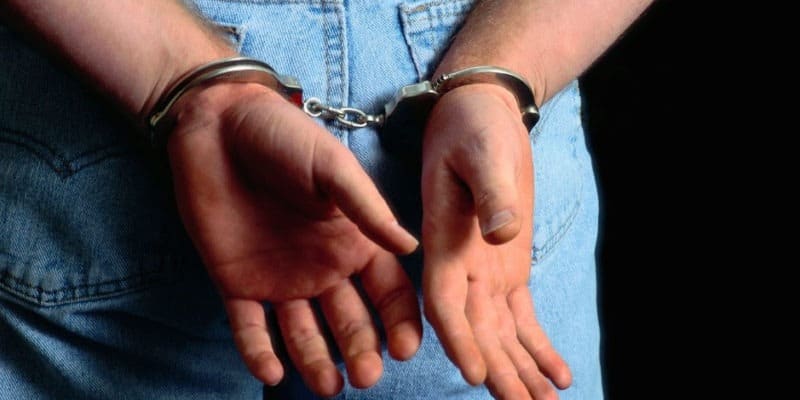
A Toms River construction contractor pleaded guilty Wednesday for not paying his employees prevailing wages for their work on a student housing project in Camden, the New Jersey Attorney General said.

The state recommended Albert Chwedczuk be sentenced to three years in prison. He also must pay up to $200,407 in restitution to his workers.

“This employer cheated his workers and hoarded public funds for his own enrichment,” Attorney General Gurbir S. Grewal said in a statement. “This case is a message to all employers that we will not tolerate contractors underpaying their workers and lying about it.”

Contractors working on government projects are required to pay employees prevailing wage, which includes both wages and fringe benefits based on collective bargaining agreements for a particular trade in the county where the work takes place.

Chwedczuk, 45, had been barred since 2014 from working on public contracts because of previous violations of the Prevailing Wage Act when he operated Ren Construction LLC and Real Construction LLC, authorities said.

They said he created a new business called Bella Group LLC to obtain a subcontract worth $400,000 to perform masonry work for the Cooper Camden Student Housing Project on South Broadway.
(Read More)

Labor Commissioner & Consumer Affairs Alert Garden State Accountants on Misclassification this Tax Season (NJ)

Labor Commissioner & Consumer Affairs Alert Garden State Accountants on Misclassification this Tax Season

Misclassifying workers as 1099 independent contractors denies benefits and costs the state

March 20, 2019, 4:41 pm

TRENTON – This tax season, the New Jersey Department of Labor and Workforce Development, in conjunction with the New Jersey Division of Consumer Affairs, sent a letter to Garden State accountants reminding them of the legal standard for proper classification of employees and reinforcing the state’s commitment to ending worker misclassification.

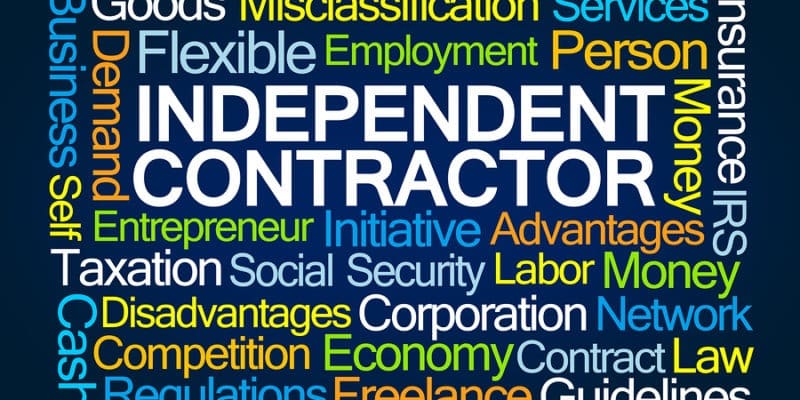
By misclassifying workers as independent contractors – workers who receive 1099s, not W-2s – employers avoid paying unemployment and disability taxes, costing state and federal taxpayers untold millions of dollars. In New Jersey alone, auditors have identified more than $80 million in underreported employer contributions since 2010.

“One of the Labor Department’s primary responsibilities is protecting workers from unscrupulous business practices, and supporting responsible businesses by ensuring everyone plays by the same set of rules,” said Labor Commissioner Robert Asaro-Angelo. “We are engaging New Jersey’s accounting professionals to send the message to employers that they are not able to shirk their responsibilities simply because they have unlawfully elected to use a particular form.”

Workers misclassified as independent contractors are ineligible for the wage and overtime protections and benefits afforded to employees, and can find themselves underpaid and without basic labor and OSHA protections. Additionally, independent contractors are not covered under the National Labor Relations Act, which makes it more difficult for them to organize and collectively bargain with an employer.

(Read More)

Lujan Grisham signs bill invalidating counties’ right-to-work laws (NM)

By Andy Lyman
March 29, 2019

Supporters of right-to-work legislation in New Mexico were dealt a big blow Wednesday when Gov. Michelle Lujan Grisham signed into law a bill to prohibit counties from passing their own right-to-work laws.

Compulsory union fees in the public sector was struck down by the U.S. Supreme Court in June 2018, but private sector unions can still require workers to pay union fees. It’s against the law for all unions to require workers to pay dues, but they can collect fees to pay for the wage and benefit bargaining.

With the governor’s signature, House Bill 85-sponsored by Democratic Reps. Daymon Ely of Albuquerque and Andrea Romero of Santa Fe-invalidates resolutions passed, over a span of about 14 months in 10 New Mexico counties and one village, that barred union membership as a condition of employment.

Lujan Grisham spokesman Tripp Stelnicki bluntly said state law takes precedence over local government.

“New Mexico is not a so-called ‘right-to-work’ state,” Stelnicki said. “That’s the reality in every county.”

The bill was a direct answer to a push by right-leaning organizations, led by Americans for Prosperity, to localize efforts that failed to pass the Legislature in 2015. That year, with a majority in the House, Republicans passed a bill that would have made it illegal for employers or labor unions to require workers to join a union as part of the job. That bill never made it past the Democratically controlled Senate.

A couple of years after that bill failed, Americans for Prosperity, a politically right-leaning group, began working with county commissions across the state to slowly pass their own right-to-work measures. Sandoval County was the first in the state to pass the law, but was quickly answered by a federal lawsuit from a labor union. The local labor union in that case argued the county did not have the authority to pass such a law and used an advisory letter from New Mexico Attorney General Hector Balderas to back up its claim.

(Read More)

Say yes to more prevailing wage: Requiring higher pay for laborers in all public works is good for New York’s middle class (NY)

By KEVIN DUNCAN
NEW YORK DAILY NEWS
MAR 20, 2019

Over a century ago, New York State established its first prevailing wage law. It was based on the common-sense principle that workers who build something for the public good be paid a fair wage for their work. It’s a deal that’s paid off for New York and for countless families who’ve been lifted into the middle class through hard work and sweat equity.

Prevailing wage laws require construction workers who do major jobs for state or local government to be paid at rates that are set through negotiations between businesses and laborers.

The problem today is that more and more big projects are being funded as public-private partnerships, blurring the line of what’s considered “public work.” Construction projects are being built throughout the state, subsidized with public funds, that are able to evade requirements to pay a decent wage to their workers.

Take the Trump Ferry Point Golf Course in the Bronx. New York City taxpayers spent over $120 million to build a golf course on the site. Trump was then selected to operate the course, and as part of that deal, built a $10 million clubhouse.

Because this part of the project was not clearly defined as “public work,” the billionaire developer was able to do so without wage requirements, keeping the extra profit for himself.

That’s why we need legislation to clearly define public work – and a bill currently under consideration in the state Legislature does just that. Supportive language was just included in one-house budget resolutions, and the governor has signaled his support as well.

A clear definition of public work will create a bright line test so there’s no more ambiguity. Under the proposed law, a project will be considered public work if: the construction is paid for in whole or in part with public funds, or the construction is performed in contemplation of a public entity leasing a portion of the space in the resulting development.

This would relieve the state of the great administrative burden of trying to determine whether or not various projects are public work. Furthermore, it would grant the Department of Labor additional enforcement abilities to better ensure that public funds are used appropriately.

(Read More)