
Workers on Digi-Key project paid back wages after violation (MN)

By: Brian Johnson
October 1, 2019

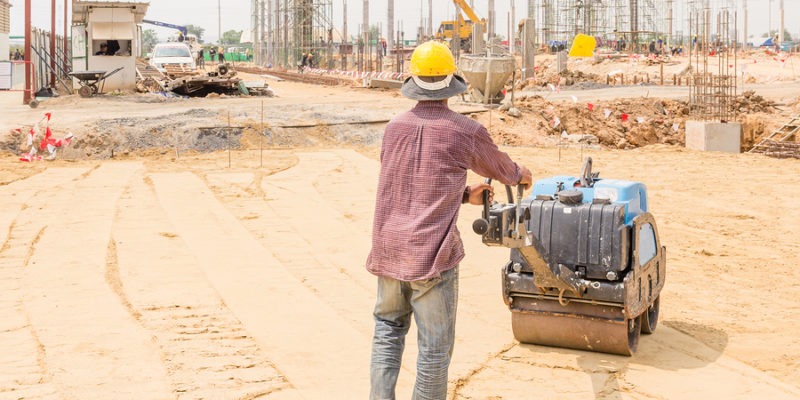
At least three concrete workers on the $300 million Digi-Key expansion project in Thief River Falls have received thousands of dollars in back pay after a state agency found that a project subcontractor violated state wage laws.

In a Sept. 24 letter to concrete worker Franklin Flores, an investigator with the Minnesota Department of Labor and Industry said Flores’ employer, Millennium Concrete, was “in violation of state labor standards and prevailing wage laws.”

Millennium owed back wages for work performed between April 1 and Dec. 1 of last year, according to the letter.

A laborers’ union official who assisted the employees confirmed to Finance & Commerce that three affected workers each received checks “in the $8,000 to $9,000 range” along with the letter from the department.

Illinois-based McShane Construction is the general contractor on the Digi-Key project.

“While McShane is not aware of the number of workers involved or amounts due them, we are pleased the wage issue is being resolved,” McShane President Jeff Raday said in an email. “We mandate that all of our subcontractors comply with all federal and state minimum wage requirements, including compliance with prevailing wage requirements on projects subject to the Davis-Bacon Act. We are committed to fair compensation for each and every worker on our job sites.”

The Minnesota and North Dakota chapter of the Laborers Union International of North America and others raised concerns about potential prevailing wage violations on the state-subsidized Digi-Key project last June.

“We were happy to finally see it in writing that there were prevailing wage violations. This isn’t just us speculating on it,” Kevin Pranis, the union’s marketing director, said in an interview Tuesday.

Flores and the two other workers, Jairo Cruz and Walter Torres, filed a complaint with the Minnesota Department of Human Rights last week. The complaint alleged the workers suffered discrimination and mistreatment while working on the Digi-Key project.

Cummins & Cummins, a Minneapolis-based law firm, is representing the workers in the human rights claim.

(Read More)

Labor Training Program Aims To Bring Younger People Into Illinois Construction Trades (IL)

By ERIC SCHMID
9-12-19

EDWARDSVILLE – A new program that gives high school students hands-on experience with the construction trades kicked off this year.

Over two years, juniors and seniors from local high schools will learn to pour concrete, install pipes, construct scaffolding and other aspects of the trades from certified labor instructors through the Illinois Laborers’ and Contractors Joint Apprenticeship and Training Program.

The program started in Marion, Illinois, last year and expanded to Edwardsville after labor leaders saw its success. It’s part of a larger push from local labor organizations to attract younger people to unions.

The average age of construction labor apprentices in downstate Illinois is 37, said Vicky McElroy, the apprenticeship coordinator at the Edwardsville training facility.

“We thought this was a way to get some good students and young people into the trades,” she said.

Sixteen juniors from Edwardsville High School make up this year’s inaugural class. The students go to the training facility for two hours every morning for a mix of classroom training and hands-on courses.

It’s new territory for the training center’s instructors, who are used to older apprentices.
“In some ways it’s a very big advantage,” said Jason Jackson, one of the course instructors. “If I’m teaching them math or labor history or anything like that, I can actually send them home with homework.”

He acknowledges there are challenges, too. One of those is managing a room full of teenagers, he said, and another is fitting hands-on activities, like pouring concrete, into the two-hour course blocks.

(Read More)

Gov. J.B. Pritzker announces $23.5 billion in road projects, bridge repairs (IL)

By Greg Bishop
10-21-19

Gov. J.B. Pritzker unveiled Monday a multi-year plan to spend $23.5 billion on road and bridge projects that were included in Illinois’ $45 billion capital plan, which will be funded through tax and fee hikes.

The Rebuild Illinois plan enacted this summer doubled the state’s gas tax from 19 cents to 38 cents a gallon. Taxpayers have already paid more than $414 million in just two months, $200 million more than the year before. The plan also increased other driving fees. Such funds are going to roads and bridges in the plan.

Pritzker detailed $23.5 billion in road and bridge spending specifics on Monday in Springfield. The multi-year plan’s detailed projects can be found at IDOT.Illinois.gov.
The plan covers more than 2,000 miles of roadway and 847 bridges.

Illinois Department of Transportation Secretary Omer Osman said state funding would be supplemented with about $9 billion from the federal government.

“And of course that’s going to give us the flexibility of matching any federal funding,” Osman said. “And even if we have another transportation bill coming out of [Washington] D.C., even if that goes up, we still have the ability to match that increased funding.”
Pritzker said the state is also using a federal Transportation Asset Management Plan standard.

“Many other states have been working toward that standard, we are for the first time working toward that standard,” Pritzker said. “What does that mean? It means we’re saving a lot of money for taxpayers as we’re focusing on our roads and bridges.”
The U.S. Department of Transportation said TAMP is “a strategic and systematic process of operating, maintaining, and improving physical assets, with a focus on engineering and economic analysis based upon quality information, to identify a structured sequence of maintenance, preservation, repair, rehabilitation, and replacement actions that will achieve and sustain a desired state of good repair over the lifecycle of the assets at minimum practicable cost.”

Illinois’ TAMP was accepted by the federal government in August.

“We look forward to working with IDOT as you implement the TAMP to achieve and sustain a state of good repair over the life cycle of both pavement and bridge assets and to improve or preserve the overall condition of the National Highway System,” U.S. Department of Transportation Division Administrator Arlene Kocher said.

No money has gone out from Illinois’ plan yet, but Pritzker’s administration said it will use pay-go funds for roads and bridges and borrowing through taxpayer-backed bonds for larger highway projects such as interchanges.

Laborers Local 477 representative George Alexander said the statewide infrastructure plan would put unions back to work.

(Read More)

unnamed

Editorial: Wages are low enough (IN)

Kokomo Tribune
Oct 13, 2019

Many of us are earning what we made last year, maybe even the year before that.

By many measures the economy is improving: the unemployment rate continues to edge down to historic levels while job growth is up. But one stubborn indicator of recovery remains stagnant: Wages in the U.S. have been low and relatively flat since 2009.

Workers’ share of corporate income has plummeted dismally in the past 25 years, according to the Economic Policy Institute, a nonprofit, nonpartisan think tank dedicated to economic policy discussions. The Great Recession, from 2007 through 2012, put significant downward pressure on pay.

Yet in 2015, the Indiana Legislature ended the common construction wage. The Republican-led initiative did away with a state law setting the minimum wage that contractors working on public projects must pay.

Supporters suggested the local boards that determine the wage were artificially inflating wages and said elimination of the provision would lower project costs and save taxpayer money.

A study released only last year indicates the opposite is true.

A Midwest Economic Policy Institute study released in January 2018 said repeal of the prevailing-wage law in Indiana “has failed to produce any taxpayer savings on school construction projects and has had a negative effect on wages, job growth, productivity and other economic and industry indicators.”

The study, which included the work of Colorado State University-Pueblo economics professor Kevin Duncan, found:

* An 8.5% drop in wages in blue-collar construction jobs.

* A 15.1% drop in wages for the lowest-paid construction workers.

* A 5.3% slower rate of productivity compared to neighboring Midwest states with prevailing wage laws.

* A 1.5% slower rate of job growth in public works than neighboring Midwest states.

(Read More)

Kentucky lawmakers push for $15 minimum wage (KY)

by: Wave 3 News
August 20, 2019 at 9:53 PM EDT

(WAVE) – Pre-filed legislation would raise the minimum wage for workers in Kentucky.

Sen. Reggie Thomas, D-Lexington, and Rep. Kathy Hinkle, D-Louisa, filed Bill Request 132 and Bill Request 237, respectively.

The bills call for a large increase of the state’s minimum wage over the next seven years.

It would increase to $15 an hour by 2027.

“I have pushed to have this heard before,” Thomas said. “I’m not going to stop. Just because you have a first strike and second strike doesn’t mean you stop swinging.”

Added Hinkle: “It is time for us to step up to the plate and take care of our citizens, and that is what we are sent here to do.”

The General Assembly will take up the matter in January.

(See Article)

TWO MASSACHUSETTS FIRMS FALL SHORT ON $2.4 MILLION OWED OVER IC MISCLASSIFICATION (MA)

Staffing Industry Analysts
September 18, 2019

Two Massachusetts construction companies and their officers have fallen short on payments required under a 2016 consent judgement over Fair Labor Standards Act violations that included misclassifying workers as independent contractors, the US Department of Labor reported. Now, labor officials are asking the court to hold them in civil contempt.

The consent judgment required them to pay $2.4 million in back wages and liquidated damages to 478 employees. However, they have paid only $477,900 and currently owe nearly $1.8 million plus interest to affected employees, according to the department.

“These employers conceded that they unlawfully kept the wages of 478 employees and committed themselves to paying those employees under a consent judgment and order of the court. In violation of that order, the employers have unlawfully kept $1,179,842.55 of their employees’ hard-earned wages,” said Maia Fisher, regional solicitor of labor for New England.

“After numerous attempts to resolve the employers’ continued failure to comply with the court order, the US Department of Labor now asks the court to hold the defendants in contempt and impose all sanctions required, including imprisonment if necessary, to ensure compliance with the court’s original order,” Fisher said.

Named in the original 2016 consent judgement and order are Force Corp., AB Construction Group Inc. and employers Juliana Fernandes and Anderson dos Santos.

(See Article)

Opinion: Standing Up For Good Jobs in Our Community (MA)

By Staff
September 13, 2019

By Lou Antonellis, Harry Brett, Bob Butler, Peter Gibbons and Brian Kelly

Workers in Massachusetts are fortunate to have a number of excellent protections enshrined in state law. A great example of one of these protections is the prevailing wage law. Unfortunately, a loophole exists that allows unscrupulous contractors the ability to exploit workers and avoid paying them a fair wage for their labor. This loophole has allowed greedy contractors to skirt the law and lower standards for workers in a difficult and sometimes dangerous industry by utilizing off-site prefabrication facilities. By keeping the fabrication away from the construction site, these bad contractors are underbidding the law-abiding local contractors and cheating working people out of a fair wage.

The members of the union building trades, who we are proud to represent, are a well-trained, professional workforce who spend hundreds of hours training in state-certified apprentice programs. Many of them are trained right here in Dorchester and are qualified to design, fabricate and assemble products and equipment installed at the project site. Furthermore, our members are OSHA-trained and certified.

That’s why the union building trades are so deeply invested in fighting to close this loophole. Our members live in your community. We’re your neighbors, youth soccer coaches and karate instructors. We work, learn and play alongside you and your family everyday, and we’re committed to our region’s future. We don’t want to see these bad actors driving wages and standards down in our towns.

Thankfully, Representative Tackey Chan (D-Quincy) has proposed an excellent solution in the form of H.1599, known as the Off-Site Fabrication Bill, which would close this loophole and end a practice that allows bad contractors to undercut good ones.

We’re calling on the leadership of the Joint Committee on Labor and Workforce Development to move H.1599 out of committee so the Legislature can consider it for a vote in this current session. Both California and New Jersey have enacted similar laws, strengthening worker protection and ensuring that standards for their communities are being upheld. We can’t let our communities fall behind and allow these bad contractors to continue exploiting this loophole.

By passing H.1599 our elected leaders are taking a stand to ensure the quality of construction for our public works projects, as well as the fair wages and working conditions for the women and men working on both the construction site and in fabrication facilities.

Everyone who works deserves fair treatment, a safe working environment and a fair wage for their labor. Passing H.1599 would ensure that workers in off-site fabrication facilities have the dignity they deserve. Let’s take a stand together for strong communities that value hard work. Let’s level the playing field for our local, law-abiding contractors. Please join our members and call your state senator and state representative today to urge them to move H.1599 out of committee and call a vote.

For more information or to join the fight to close this loophole, please visit www.smw17boston.org.

Lou Antonellis is the Business Manager of IBEW Local 103
Harry Brett is the Business Manager of Plumbers Local 12
Bob Butler is the Business Manager of Sheet Metal Workers Local Union 17
Peter Gibbons is the Business Manager of Sprinkler Fitters Local 550
Brian Kelly is the Business Manager of Pipefitters Local 537

(See Article)

Michigan Legislature Considers Package of Bills Addressing Wage Theft, Independent Contractors, and Noncompetes (MI)

The National Law Review
Friday, September 6, 2019

On August 29, 2019, legislators from the Michigan House of Representatives announced an ambitious package of 12 bills aimed at creating new criminal and civil penalties to combat employers that fail to properly pay wages and overtime pay. The legislation would also establish enhanced protections and penalties under Michigan’s whistleblower statute and create new civil remedies against employers for overzealous enforcement of noncompete agreements and for misclassifying employees as independent contractors.

Background

The bills’ highly publicized announcement, which was coordinated with local labor union leaders to occur just before the Labor Day holiday, aligns with Michigan Attorney General Dana Nessel’s Payroll Fraud Enforcement initiative. Nessel introduced the initiative in April 2019 when she created a payroll fraud hotline for reporting suspected violations of existing payroll and wage theft laws in effect in Michigan.

The new legislation would make employee-friendly modifications to several Michigan statutes, including the Payment of Wages and Fringe Benefits Act (PWFBA), the Whistleblowers’ Protection Act (WPA), the Michigan Antitrust Reform Act (MARA), and the Improved Workforce Opportunity Wage Act (IWOWA), and would amend the Michigan Code of Criminal Procedure to create a new felony offense for employers that commit a second or subsequent violation of certain provisions of the PWFBA.

Summary Analysis of the Bills

Below is a summary of the initial drafts of the ten House bills in the package that would have the most significant effect on private employers. It is important to note, however, that these are initial drafts of proposed legislation and are a long way from being enacted into law, especially given the current composition of the Michigan Legislature. However, the intense interest from the attorney general’s office and any changes in the makeup of the House and Senate could give the bills momentum.

Final Thoughts

As Jimmy Stewart taught us all in his 1939 film Mr. Smith Goes to Washington, bills introduced on the legislative floor have a long way to go before they become law. To be sure, the potential for civil fines ranging from $5,000 to $10,000 per violation, mandatory assessment of attorneys and lost wages, and the possibility of felony criminal penalties make the legislative package something that will garner a lot of attention. Moreover, given the intense interest from the attorney general’s office and Michigan labor leaders, it is unlikely that the bills will die without significant debate and perhaps some provisions being passed into law.

(Read More)

Clean energy jobs are big in Minnesota. But they often go to people from out of state (MN)

By Walker Orenstein | 08/16/2019

The fastest growing jobs in the country are solar panel installers and wind turbine service technicians, a fact that clean energy advocates use as evidence of a growing sector and the economic upside of transitioning away from fossil fuels.

But in Minnesota, the rise of clean energy isn’t always resulting in new jobs for Minnesotans – at least when it comes to building wind projects. A report released Thursday by the Minnesota and North Dakota chapter of the Laborers’ International Union of North America says wind developers heavily rely on traveling workers, often from other states, even though there’s been an uptick in local hiring for the construction jobs this year.

Lucas Franco, the LIUNA branch’s research manager, says workers from states like Texas, Utah and California are often cheaper and can make up the bulk of a project in Minnesota. In-state residents or workers living within 150 miles of a major wind farm in Pipestone County accounted for 32 percent of construction hours worked, for example. Preliminary research done by LIUNA also suggests solar developers often lean on out-of-state workers for construction, Franco said.

“It’s a big concern for us, particularly in the context of this moment, of our energy infrastructure transition that we’re in,” he said. “A lot of clean energy advocates are trying to build popular support for new wind and solar projects, and I think that’s hard to do when folks in the conventional energy sector are losing their work and not necessarily finding work building wind farms or solar farms.”

(Read More)

Roseville adds labor standards to subsidies after union criticizes developer’s use of subcontractors (MN)

By J.D. DUGGAN
PUBLISHED: September 20, 2019 at 6:58 pm

Roseville has begun adding labor standards to development tax break deals after union officials raised concerns about how developers are using subcontractors.

Earlier this week, prompted by a dispute over a $29.4 million Fairview Avenue apartment building, the city required developers to obey all environmental, labor, health and zoning laws and restrictions, as well as to pay all contractors, subcontractors and laborers before requesting a Certificate of Completion. If a developer is found guilty of wage theft, the city can withhold payments.

“How are we going to make sure people are treated fairly and paid fairly and not given these promises?” said Roseville City Council member Wayne Groff. “I don’t know how much this will affect this exact development.”

The requirements will become standard language in all future agreements where the Roseville Economic Development Authority provides financial assistance.

Roseville’s move comes after members of the North Central States Regional Council of Carpenters told members of the Roseville Economic Development Authority at a meeting that some developers use subcontractors who allegedly break labor laws such as using child labor, stealing wages and exploiting workers.

DEVELOPER IN THE CROSSHAIRS

Minneapolis-based Reuter Walton is planning an apartment building in the 2700 block of Fairview Avenue in Roseville. A $3.5 million tax increment financing deal would be part of the package.

As the project neared its final approval stages, members of the carpenters union jammed an Economic Development Authority meeting and objected to Reuter Walton’s use of subcontractors. One of those past subcontractors – Ricardo Batres – was charged with labor trafficking, theft by swindle and insurance fraud.

The union has taken its criticisms to other cities where Reuter Walton is considering projects, including St. Paul, where an apartment complex was approved last month.

“Reuter Walton continues to profit off of these (subcontractors) that are engaging these violations repeatedly,” said Richard Kolodziejski, spokesperson for the carpenters union.

(Read More)